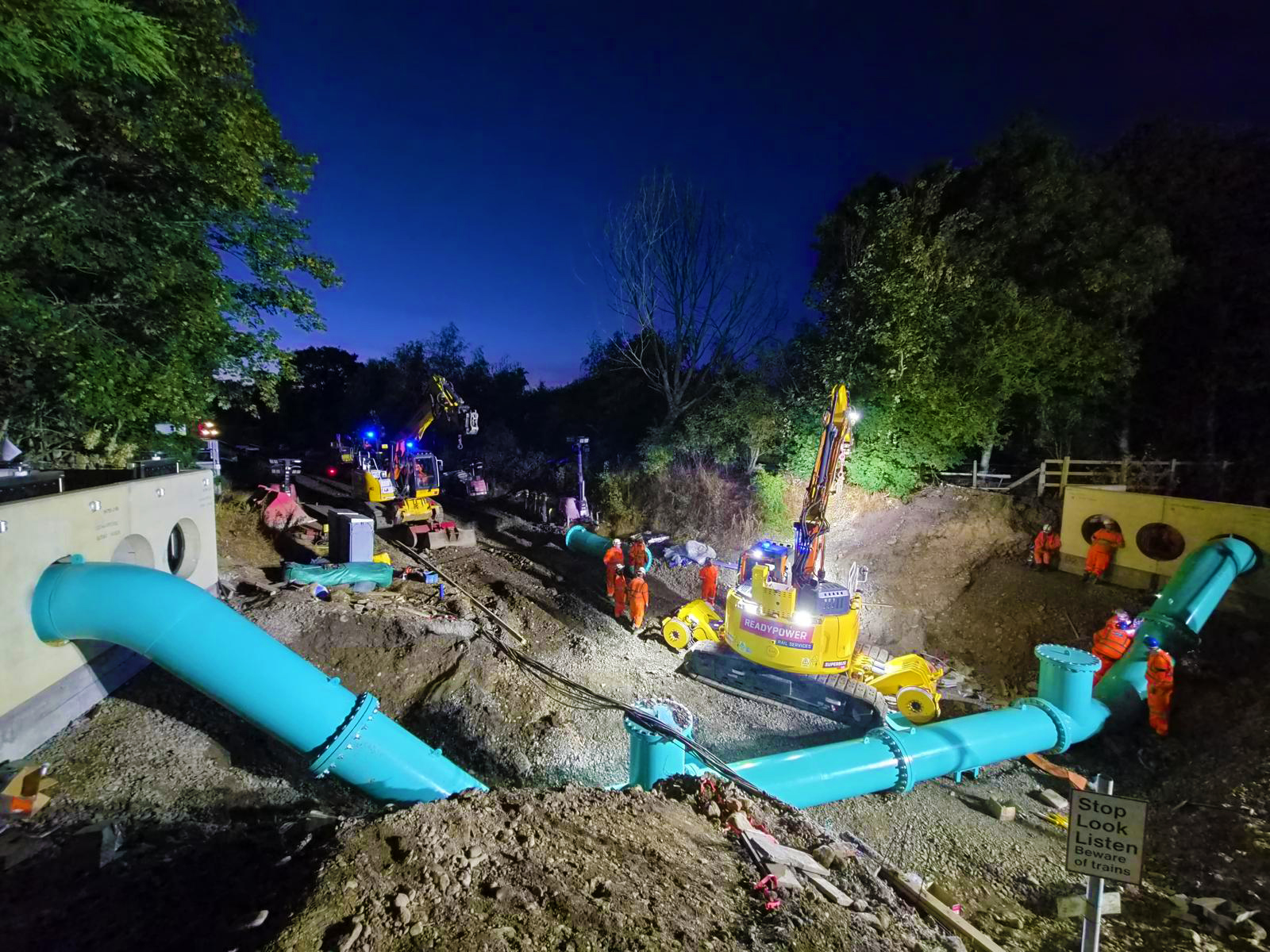
The South Rail Systems Alliance (SRSA) Drainage team has successfully completed a major renewal of critical cross-track drainage infrastructure at Gobowen, Shropshire.
The project centred on the replacement of an ageing siphon that carries a nearby river beneath the railway, helping to protect both the rail network and surrounding area from flooding.
Before work could begin, the team worked closely with Network Rail, Shropshire Council, local landowners, the Lead Local Flood Authority and Natural Resources Wales to secure the necessary permits, approvals and environmental consents.
To enable construction while maintaining the natural flow of the watercourse, a temporary water management system was installed. This included a dam, over-pumping arrangements, and contingency pumping equipment, allowing the river to be safely diverted away from the worksite.
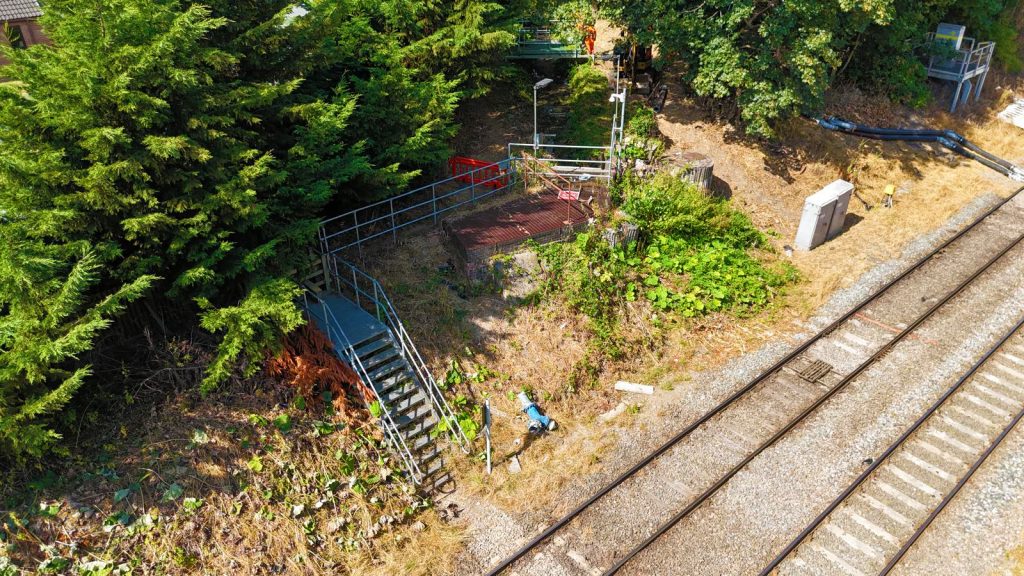
With these measures in place, the team removed sections of track and excavated around the existing structure to a depth of approximately two metres below track level, with even deeper excavations required on either side of the railway embankment. This extensive enabling work provided access to the existing siphon and laid the foundations for the installation of the new drainage infrastructure. The scheme represents a significant investment in the resilience of the railway, ensuring the route is better protected against future drainage and flood-related challenges while maintaining safe and reliable rail operations for years to come.
This enabled the installation of a new prefabricated set of headwall components, incorporating treble 900mm diameter siphon bores. Following installation, the formation and track were fully reinstated, including stressing and tamping, alongside all associated groundworks to hand back to the client with the highest track quality.
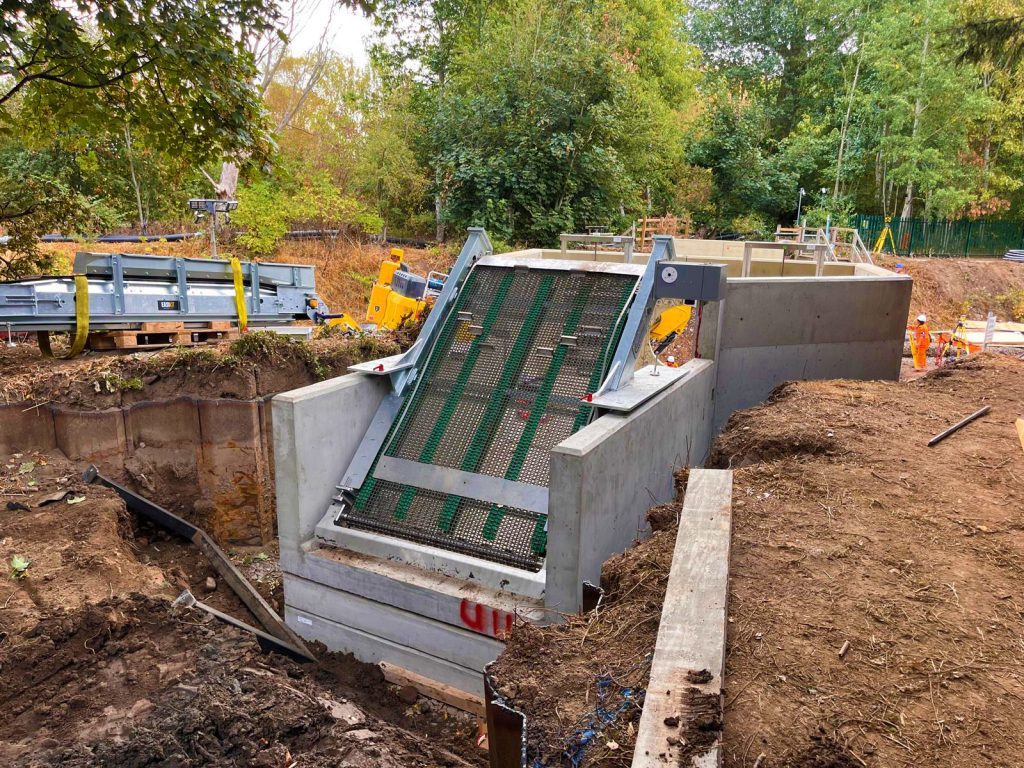
Other parts of the project scope included the installation of a solar and hydro-powered, fully automated and self-managing electric trash screen. The system prevents debris from entering the siphon by automatically removing it onto a conveyor belt, which then discharges the material into the cess. This new system significantly reduces the ongoing maintenance burden associated with the asset and significantly reduces pollution for the local wildlife and waterways.
Speaking about the successful delivery of the scheme, SRSA Production Manager, Joe Smales said “Ultimately, the completed infrastructure upgrades provide a much more resilient solution and should significantly reduce the risk of flooding that has previously occurred
“The new system removes a lot of the difficulties associated with maintaining and clearing the existing asset.
“I’m thankful for our team, supply chain and organisations we worked alongside on a really significant project for the local community, with a substantial amount of complex civil engineering, railway and environmental work delivered within the project.”
First published: 21st September 2026